
STEM Unbarred
Hands-on STEM education for youth impacted by the criminal legal system
Putting science in young people's hands
Hands-on learning is at the heart of good science education. But for students in carceral settings, chances to run experiments, test out ideas, or meet people who work in STEM are few and far between.
The Puttkammer Center for Educational Justice recently surveyed system-impacted youth. 75% said they prefer to learn STEM by doing, yet only 33% had ever run a practical experiment.
STEM Unbarred grew out of that gap. The Petey Greene Program launched it in 2022 to bring hands-on science demonstrations to students, spark their curiosity, and open up STEM beyond the traditional classroom.
Since then, we've worked with more than 500 youth. What started as a single demonstration is now 16, spanning several scientific disciplines.
How it works
STEM Unbarred brings science to life through interactive demonstrations in biology, chemistry, physics, engineering, and more.
Each session runs about 90 minutes to two hours, mixing instruction with experiments and group activities. Students observe, test their ideas, make sense of the results, and connect what they've learned to situations they know.
We built the curriculum together with incarcerated youth in Washington, DC. Their interests shaped the topics and activities, because we see students as active partners in their education, not just people on the receiving end of a lesson.
The program is also modular. Every demonstration works whether or not a student has any background in the subject or has been to an earlier session. That matters in correctional settings, where schooling and attendance are often interrupted.
Volunteers who work in STEM fields lead the sessions, so students get to talk directly with people doing this work.
What we're seeing
Students take a short survey and quiz before and after each demonstration. These measure interest in science, confidence in using it, and what students actually know. Across the program's first four years, even a single demonstration made a measurable difference.
Interest in science: average ratings rose from 3.7 to 4.5 on a five-point scale.
Confidence using science: when asked how confident they felt applying science to topics they care about, students' average ratings rose from 3.8 to 4.5.
Both changes were statistically significant.
Knowledge grew too. Average test scores went up by about 30% after the physics demonstration and about 48% after the genetics demonstration.
These results are encouraging. They suggest that short, hands-on activities can deepen both understanding and interest. We still need to learn how these early gains carry over into longer-term educational outcomes, and further evaluation will help us find out.
STEM Unbarred is also rooted in positive youth development: learning from peers, building supportive relationships, and giving young people room to explore their interests and aspirations.
Explore our STEM demonstrations
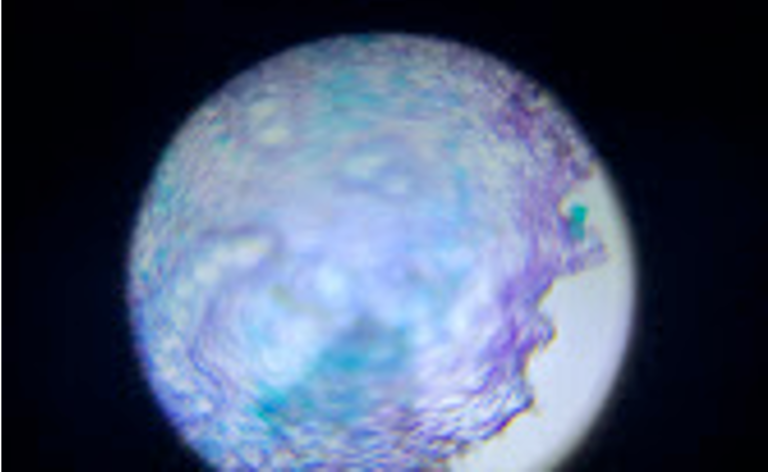
Microscopy
There's a whole world of living things too small to see with the naked eye. Working with Science With Us, students use lab microscopes to prepare and study their own samples: cheek cells, yeast, plant and flower cells, and the tiny organisms living in pond water.
Along the way, they pick up real microscopy techniques, see how varied microscopic life is, and get to investigate biological structures up close.
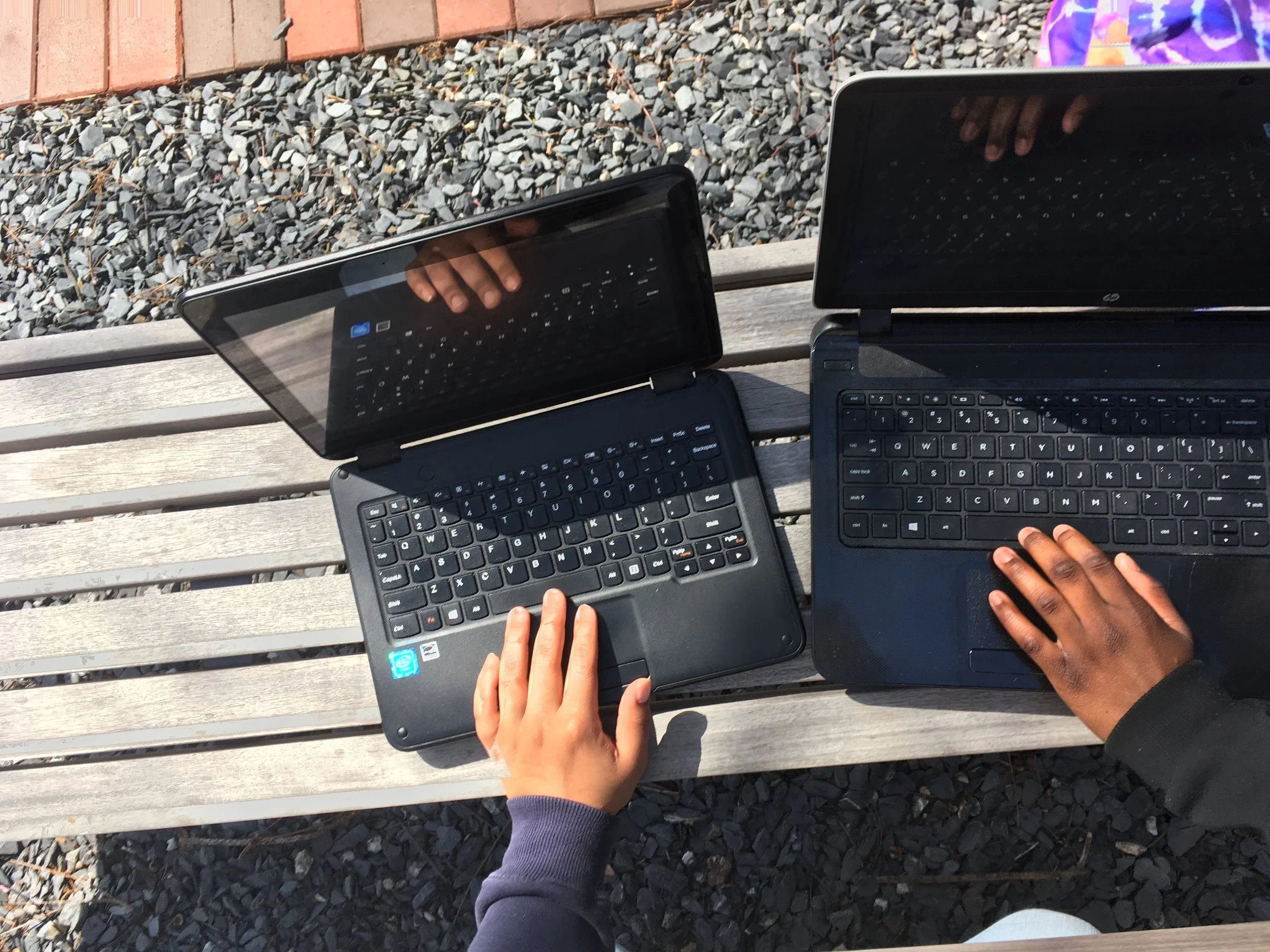
Computer Science
How do you learn programming without a computer?
We start with computer-free activities. In one, students program Wiffle, a waffle-making "robot," to complete a series of tasks. Doing that, they run into variables, methods, functions, conditionals, loops, and abstraction. Then they put those ideas to work in programming exercises on Scratch.
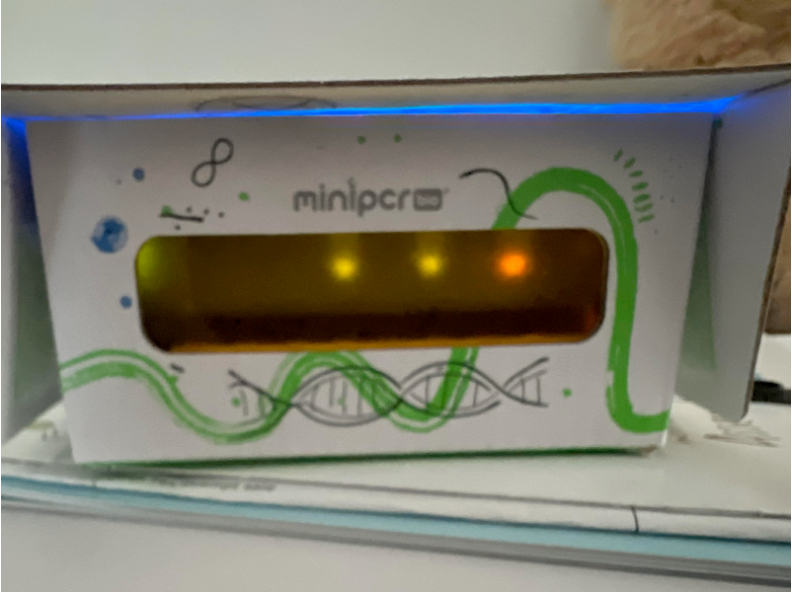
Genetics
What makes us alike, and what makes us different?
Over three sessions, students look at how genetic information is stored, passed on, and put to use. They extract DNA from strawberries, compare DNA using gel electrophoresis, and visualize how DNA is transcribed into RNA and translated into proteins.
We developed these activities with miniPCR, and they introduce core ideas in molecular biology through hands-on experiments and visual models.
Chemistry
Chemical reactions happen when atoms rearrange and bonds break or form.
In a series of interactive demonstrations, students explore atoms, elements, molecules, and what makes different substances behave the way they do. One activity uses chemical properties to make ice cream, which ties the science to everyday materials students already know.
Physics and engineering
How does electrical energy turn into sound?
Students find out by building their own speakers. Along the way, they see how electricity creates magnetic effects that cause vibrations, and how those vibrations become sound.
The activity also introduces engineering design, so students use scientific ideas to build something that works.
Built together
Petey Greene Program volunteers Anagha Krishnan and Hannah Dada created STEM Unbarred with staff from PGP's DC Regional Office and the Puttkammer Center for Educational Justice.
The idea came from their time tutoring students at the Youth Services Center in Washington, DC, and from talking with those students about what they were curious about and what opportunities they wished they had.
STEM Unbarred works alongside regular classroom instruction. It adds the experiments and hands-on activities that are hard to fit into conventional correctional education.
What's next
Right now, STEM Unbarred runs at the Youth Services Center in Washington, DC. Based on what we've learned from the first rounds of the program and its evaluation, the Petey Greene Program is getting ready to bring the model to more correctional facilities, reentry programs, and diversion settings.
In this next phase, we'll adapt the curriculum for different learning environments, strengthen our evaluation, and work out which resources and partnerships we need to keep the program going for the long haul.
Our larger goal is to make hands-on STEM a regular part of the education offered to youth impacted by the criminal legal system, including students whose backgrounds and needs traditional approaches too often miss.